

Why are you cast down, O my soul?
And why are you disquieted within me?
Hope in God, for I shall yet praise Him
For the help of His countenance.
– Psalm 42:5
I had a teacher once who shared a thought that has stuck with me. In a class discussion about theology, the comment was made that good theology has balance to it. The teacher’s perspective was slightly different. Rather than thinking of it as balance, his preference was to think of it as tension. Maybe the difference between the two isn’t significant. Still, there is a nuance that I have found valuable. Tension suggests a more active resistance at work, forces that are countering the others so that the whole functions well. A trampoline makes a great illustration. The only way a trampoline works well is to have many springs pulling in opposition to one another. Tension makes it work.
Psalm 42 returns us to the subject of “why.” In the blog post Why (part 1) we considered Psalm 10:1 and the matter of gnawing questions that God leaves unanswered. The “why” of Psalm 42 is like the tension to Psalm 10. Rather than the question being posed to God, the psalmist poses the question to himself. And rather than the question expressing frustration, the “why” is used to recall a necessary piece of information, something that changes the game. Why are you cast down, O my soul? The writer knows perfectly well why his soul is cast down. Reality has burned it into his consciousness. It is not a question of curiosity; it is a question that reaches back into the memory of faith.
By now you may be noticing the emotional tension that lives in the psalms. As you move from one psalm to another, or even through the verses within a psalm, you will see the swing from anger to pleasure, from fear to security, from soul-wrenching grief to the deepest places of satisfaction. The tension helps to make the psalms real and relatable. We read them and say, “I’ve been there! I have felt exactly the same.” We know the frustration of Psalm 10 and others like it, wondering why God doesn’t do what we expect. However, if you have walked with the Lord for any substantial amount of time, you will also know the power of recalling God’s character and former deeds. That recollection is the “why” of Psalm 42.
There are a number of scenes described in the Bible that, in my opinion, powerfully illustrate how faith changes one’s perspective. One of those scenes is found in Acts 16. Paul and Silas had come to a region called Macedonia to share the gospel about Jesus Christ. They ended up being beaten with rods and thrown into a Roman prison with their feet fastened in stocks. To me, this qualifies as being a pretty rotten day. If this happened to me, I would have no problem describing why my soul would be cast down and disquieted. Apparently, though, Paul and Silas knew how to ask the second “why” question. In the middle of the night they are “praying and singing hymns to God” (Acts 16:25). Those acts of faith prime us to remember who God is. His nature is good and His love unwavering. Great is His faithfulness. If we have observed God’s faithfulness to us in the past, we know He will be faithful to work in the future, in the time and manner that is best.
The Lord will command His lovingkindness in the daytime,
And in the night His song shall be with me—
A prayer to the God of my life.
– Psalm 42:8
The person of faith lives in the tension between two seasons: daytime and night. The daytime is when we are actively seeing the hand of God work; the night is when we are waiting for His hand to work again. God does not abandon us in the night; His song is with us. When we are in the really dark nights, asking the “why” of pain and frustration, it is good to raise the “why” of remembrance. The daytime is coming again. Knowing that changes our perspective. And since you know it is coming, go ahead and sing.
When peace like a river, attendeth my way
When sorrows like sea billows roll
Whatever my lot, thou hast taught me to say
It is well, it is well, with my soul
– Horatio Spafford


-

September 8. Joseph and his Brothers / Judah and TamarRead: Genesis 37:1 – 38:30 September 15. Joseph ImprisonedRead: Genesis 39:1 – 41:49 September 22. Joseph’s Brothers Visit EgyptRead: Genesis 41:50 – 44:34 September 29. Jacob’s Family ReunitedRead: Genesis 45:1 – 47:31 October 6. Jacob’s Blessings / Jacob’s DeathRead: Genesis 48:1 – 50:26
-
Some of the people therefore, when they heard these words, were saying, “This certainly is the Prophet.” Others were saying, “This is the Christ.” Still others were saying, “Surely the Christ is not going to come from Galilee, is He? Has not the Scripture said that the Christ comes from the descendants of David, and from Bethlehem, the village where David…
-
If you have any type of study Bible, look at the introduction to the book and note what it tells you about Genesis. You might find a basic outline of the book. The notes may also give you information such as historical dates of Genesis, the author, and other such things. You might also find…
-
But Mary was standing outside the tomb weeping; and so, as she wept, she stooped and looked into the tomb; and she saw two angels in white sitting, one at the head and one at the feet, where the body of Jesus had been lying. And they said to her, “Woman, why are you weeping?” She said to…
-

They went out and fled from the tomb, for trembling and astonishment had gripped them; and they said nothing to anyone, for they were afraid. Now after He had risen early on the first day of the week, He first appeared to Mary Magdalene, from whom He had cast out seven demons. She went and reported to…
-
“Why does the church not spend time examining the reasoning behind heresy? Why is it cast as straying from God and towards the devil, and that’s all that needs to be said?” I receive these questions with gratitude in the spirit of genuine inquiry. As I begin to consider a response, I am mindful that…
-
Now on the first day of the week Mary Magdalene came early to the tomb, while it was still dark, and saw the stone already taken away from the tomb. So she ran and came to Simon Peter and to the other disciple whom Jesus loved, and said to them, “They have taken away the Lord out of the tomb, and we do…
-

When the Sabbath was over, Mary Magdalene, and Mary the mother of James, and Salome, bought spices, so that they might come and anoint Him. Very early on the first day of the week, they came to the tomb when the sun had risen. They were saying to one another, “Who will roll away the stone for us from the entrance of…
-

One of the criminals who were hanged there was hurling abuse at Him, saying, “Are You not the Christ? Save Yourself and us!” But the other answered, and rebuking him said, “Do you not even fear God, since you are under the same sentence of condemnation? And we indeed are suffering justly, for we are receiving what we deserve for our deeds; but this…
-
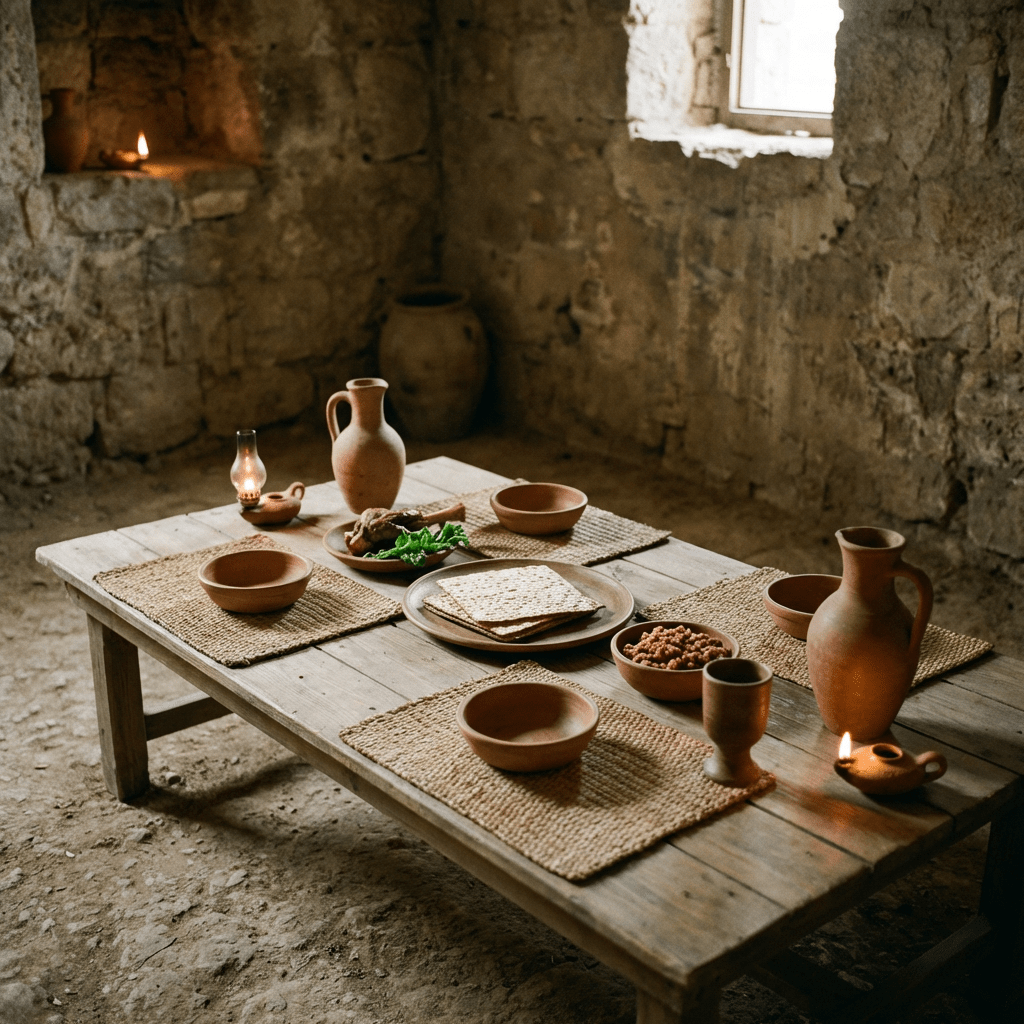
When the hour came, Jesus and his apostles reclined at the table. And he said to them, “I have eagerly desired to eat this Passover with you before I suffer. For I tell you, I will not eat it again until it finds fulfillment in the kingdom of God.” After taking the cup, he gave thanks and said, “Take this…


Leave a Reply